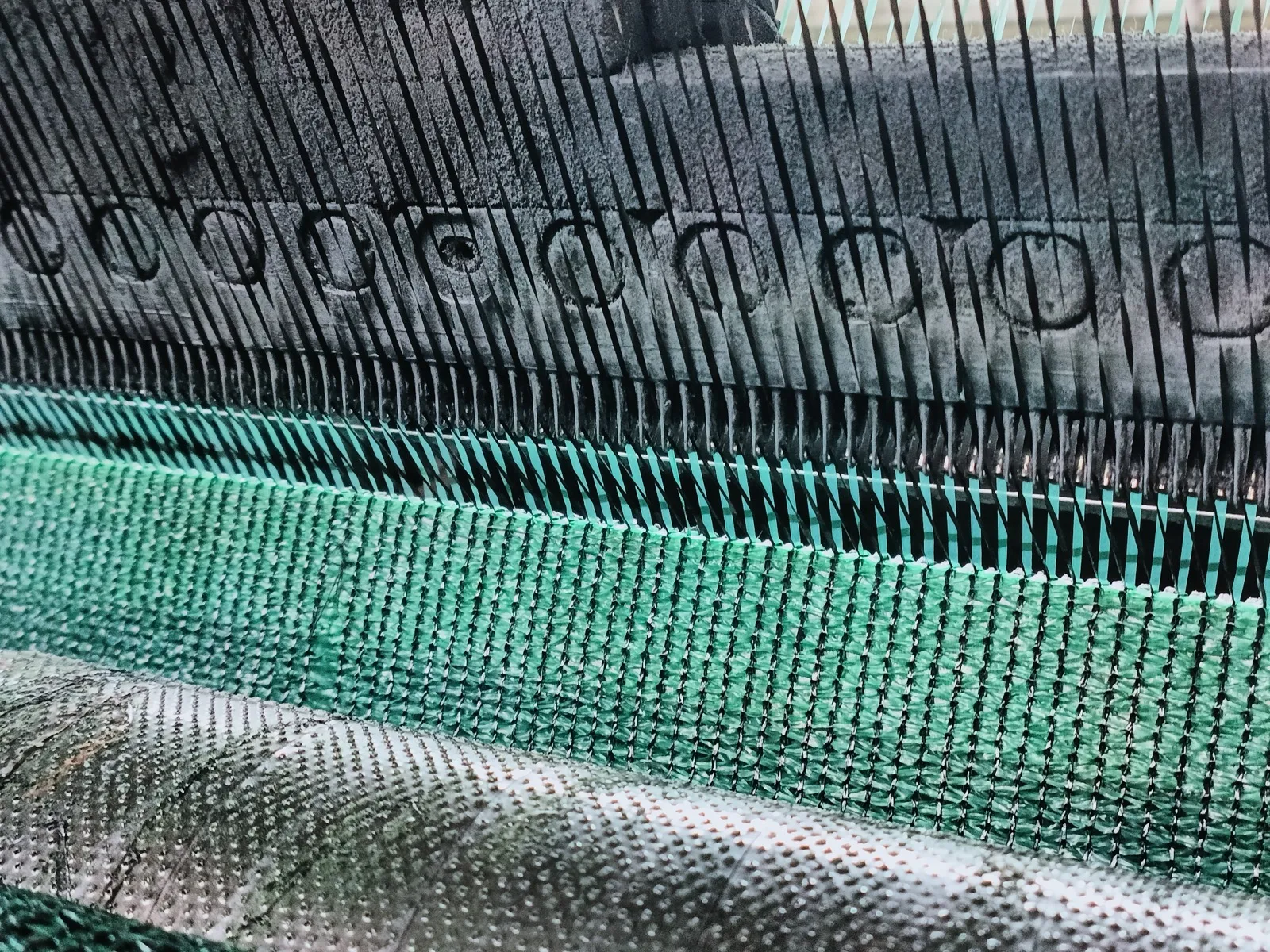
Buying Insect Netting From the Manufacturer
Insect net is the product where a wrong spec does the most quiet damage: too coarse and the pests you bought it to stop fly straight through; too fine and you have traded your pest problem for a ventilation problem — a greenhouse that runs hotter and more humid, with fungal pressure replacing insect pressure. Getting that trade-off right is a manufacturing conversation, not a catalog one. As the insect net manufacturer, we knit the full 2–7 mm mesh range in 30–110 gsm (30–50 gsm for butterfly netting) on our own machines in Changzhou, from 100% virgin HDPE with UV stabilization — and we spec against your pest list and your ventilation budget together, because the two cannot be separated.
We have knitted insect netting since 2003 for greenhouse and open-field growers across Europe, the Americas, Australia, Japan and Canada. The buyers who come back every season are the ones who got an honest answer on their first order — including “you don’t need the finer mesh.”
Mesh Aperture, Airflow and the Pest You Are Stopping
The rule that governs insect net is simple: the mesh must be finer than the pest, and no finer. Our 2–7 mm aperture range covers the standard spectrum — coarser apertures for butterflies, moths and larger pests where airflow is cheap and easy; finer apertures for whitefly, aphid and leafminer pressure where every fraction of a millimeter costs ventilation. Weight follows aperture: lighter 30–50 gsm butterfly nets for drape and row-cover use, heavier grades for permanent greenhouse screens that get tensioned, rolled and cleaned season after season. Every aperture is knitted to gauge across the container — not 2 mm on the sample roll and 3 mm inside it — because a pest does not care about averages.
Virgin HDPE, UV Package and Batch Samples
Insect net lives in the harshest UV environment of any netting product — stretched over greenhouse openings in full sun, season after season. Ours is knitted from 100% virgin HDPE with a per-batch UV-stabilizer dose, speced for a 3–10 year service life depending on grade, and every container ships with retention samples kept at the factory. If a screen on your customer’s greenhouse ever raises a question in year three, we test against the actual material from that batch.
Widths, MOQ and Container Loading
Greenhouse spans do not come in retail widths, so we knit 1–12 m wide with roll lengths 5–200 m — seamless panels matched to your bay width, no sewing, no weak joints. A 40’HQ carries 14–15 tons; MOQ is 2 tons with mixed apertures and widths in one shipment. Lead time 25–35 days after deposit; payment T/T 30/70 or 100% L/C at sight; samples free, you cover the courier. Send your pest list, crop, greenhouse ventilation area and destination port through the contact page or WhatsApp — we reply within 24 hours with an aperture recommendation and container loading math.
For butterfly and moth duty specifically — brassicas, gardens and allotments — see our dedicated butterfly netting page: 30–50 gsm with a 5–7 mm mesh tuned for egg-laying moths rather than small insects.
Insect Net Manufacturer FAQ
What mesh size insect net do I need?
Start from the smallest pest you must stop, then choose the coarsest aperture that still excludes it — finer mesh always costs ventilation. Tell us your pest list (whitefly, aphid, thrips, butterflies/moths) and crop, and we will recommend an aperture from the 2–7 mm range with the airflow trade-off stated plainly.
Does insect netting reduce greenhouse ventilation?
Yes — every insect screen reduces airflow, and finer mesh reduces it more. The standard fix is oversizing the screened area relative to the vent opening. This trade-off is exactly why mesh should be chosen against the pest list, not “the finest available.”
What is the MOQ for insect netting?
2 tons per order, with mixed apertures and widths in one container — sized for a greenhouse builder’s project or a distributor’s first season.
How long does insect netting last on a greenhouse?
3–10 years depending on grade and UV exposure. The lifespan is set by the UV-stabilizer package, which we dose per batch and document with factory retention samples.
Can you match our greenhouse bay width?
Yes — we knit 1–12 m wide seamless panels with 5–200 m roll lengths, matched to your bay dimensions so no sewing or joints are needed. Send the bay width and roll length you want on your quote request.